

Introduction
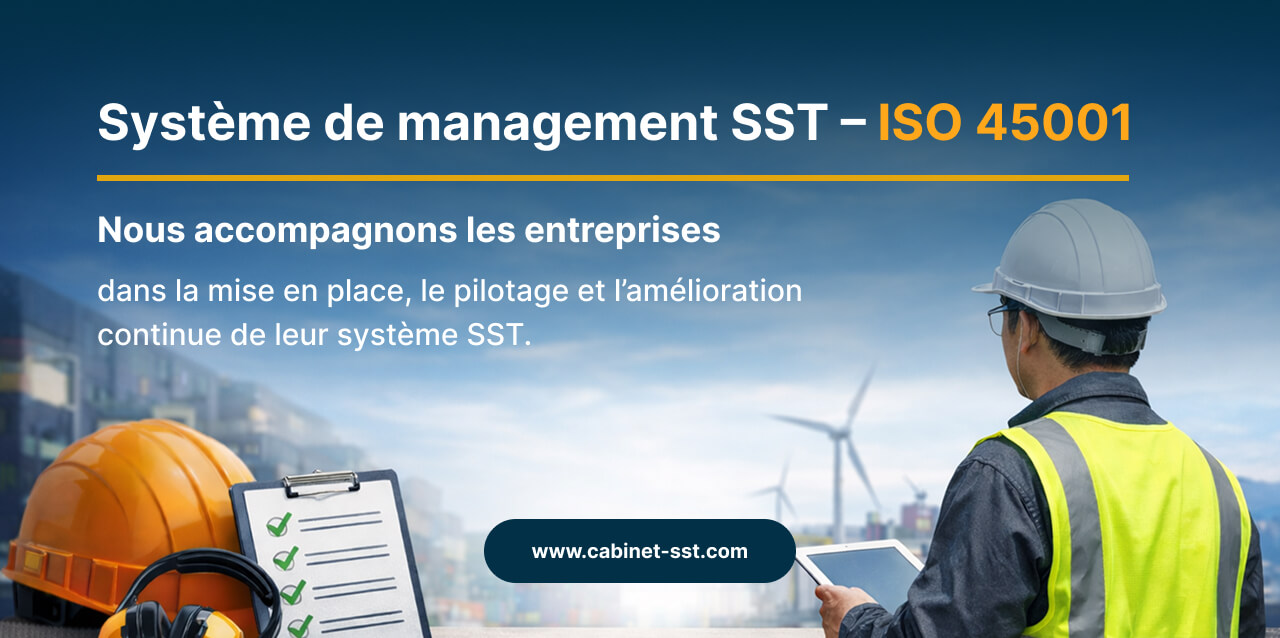
In the current business climate, prioritizing occupational health and safety has become a cornerstone for organizations seeking sustainable growth and compliance. The mission accompagnement pour audit certification ISO 45001 serves as a strategic initiative to help companies navigate the complex requirements of implementing and certifying ISO 45001 standards. This certification is recognized globally as the benchmark for occupational health and safety management systems (OHSMS), aiming to reduce workplace risks, improve employee well-being, and enhance organizational performance.
For businesses, especially those operating in high-risk environments or heavily regulated sectors, securing ISO 45001 certification is a vital step to demonstrate commitment to safety and regulatory compliance. Engaging with a trusted Cabinet conseil en SST ensures robust support through every phase of the certification journey — from initial gap analysis and system design to audit preparation and continuous improvement. This article unpacks the essentials of the mission accompagnement pour audit certification ISO 45001, its significance, underlying concepts, challenges, and practical methodologies to realize certification success.
Key Concepts & Definitions
Understanding the key terms and principles involved in the mission accompagnement pour audit certification ISO 45001 is essential to appreciate its value fully.
- ISO 45001: An internationally recognized standard for occupational health and safety management systems, designed to prevent work-related injuries and illnesses.
- Mission accompagnement: A structured consulting engagement in which an expert firm provides guidance, tools, and support to an organization implementing ISO 45001 and preparing for certification audits.
- Audit certification: The formal process conducted by an independent certification body to verify that a company’s occupational health and safety management system conforms to ISO 45001 requirements.
- Cabinet conseil en SST: A specialist consulting firm in occupational health and safety (Santé et Sécurité au Travail) guiding organizations on compliance, risk assessment, and system implementation.
The mission accompagnement pour audit certification ISO 45001 therefore involves a comprehensive partnership with a Cabinet conseil en SST that ensures organizations embed effective OHSMS practices aligned with both regulatory requirements and international best practices.
Challenges & Risks Addressed by the Mission
While the benefits of ISO 45001 certification are clear, many organizations face significant challenges when attempting to implement and maintain compliance. The mission accompagnement targets these obstacles by offering tailored solutions.
- Complex Regulatory Landscape: Health and safety regulations vary locally and internationally, making it difficult for companies to remain compliant without expert guidance.
- Resource Constraints: Smaller and medium-sized businesses often lack the internal expertise or dedicated personnel to manage complex OHS processes effectively.
- Cultural Change Resistance: Embedding safety as a core organizational value requires shifting mindsets, which can be met with resistance from employees or management.
- Risk Identification & Mitigation: Properly identifying workplace hazards and implementing controls is critical but challenging without specialized risk assessment methodologies.
- Audit Preparedness: Ensuring that documentation, processes, and practices are audit-ready demands meticulous attention to detail and ongoing monitoring.
Through the mission accompagnement, organizations receive expertise and tools to overcome these risks, enabling smoother certification processes and fostering long-term improvements in workplace safety.
International Standards & Regulations
ISO 45001 was published by the International Organization for Standardization (ISO) and replaces the older OHSAS 18001 standard. It aligns with the ISO High-Level Structure used across all ISO management system standards, facilitating integration with quality (ISO 9001) and environmental (ISO 14001) systems.
The standard emphasizes:
- Risk-based thinking to proactively identify hazards and reduce risks.
- Leadership commitment and worker participation in occupational health and safety management.
- Continual improvement of safety performance through monitoring and corrective actions.
Globally, many countries have integrated ISO 45001 within their regulatory frameworks or recognize it as a benchmark standard for occupational health and safety. Adopting ISO 45001 can also help organizations meet various local requirements, such as the European Union’s directives on workplace safety or OSHA standards in the United States.
Relevant Norms and Frameworks Supporting ISO 45001
| Framework/Standard | Focus Area | Relationship with ISO 45001 |
|---|---|---|
| OHSAS 18001 | Occupational health and safety management | Predecessor to ISO 45001; many organizations transition from this standard. |
| ISO 9001 | Quality management systems | Shares the High-Level Structure, allowing system integration for efficiency. |
| ISO 14001 | Environmental management systems | Integration facilitates a comprehensive approach to workplace safety and environmental responsibility. |
| ILO Conventions (e.g., C155) | International labor standards on occupational safety | Complement ISO 45001 by establishing fundamental labor rights and safety. |
Local Context in France
France boasts a robust regulatory and industrial environment where occupational health and safety is tightly regulated. The mission accompagnement pour audit certification ISO 45001 is particularly relevant due to the stringent French Code du Travail regulations that emphasize employer obligations regarding workplace safety.
Key points on the local context include:
- Typical sectors: Manufacturing, construction, transportation, and chemical industries dominate with high potential occupational hazards.
- Industrial Zones: Regions like Île-de-France, Auvergne-Rhône-Alpes, and Hauts-de-France are home to dense industrial and corporate hubs where safety management is critical.
- Regulatory Oversight: The French labor inspectorate (Inspection du travail) and social security bodies enforce compliance and investigate workplace incidents.
Moreover, French companies benefit from programs such as the mandatory Cabinet NPM training for workplace first responders, complementing ISO 45001 by improving emergency preparedness.
Companies leveraging a Cabinet conseil en SST with expertise in French labor law and standards gain a tactical advantage in navigating both ISO 45001 requirements and national regulations simultaneously.
Methodologies & Approaches for Successful Mission Accompagnement
The mission accompagnement pour audit certification ISO 45001 involves a systematic approach that encompasses several key phases. These structured methodologies ensure that occupational health and safety management systems meet the certification criteria and deliver tangible improvements.
- Diagnostic & Gap Analysis: Initial assessment of the organization’s current OHSMS against ISO 45001 requirements to identify gaps and areas requiring improvement.
- Stakeholder Engagement & Awareness: Building commitment at all levels, from top management to frontline workers, fostering a culture oriented toward safety.
- Risk Identification and Assessment: Implementation of recognized techniques such as HAZOP, Failure Mode Effects Analysis (FMEA), and Job Safety Analysis (JSA) to evaluate hazards.
- Development of OHSMS Processes: Designing and tailoring policies, procedures, and controls to address identified risks and comply with the ISO standard.
- Training & Competency Building: Conducting comprehensive workforce training sessions to raise awareness and develop safety competencies.
- Documentation and Record Keeping: Establishing documentation protocols to maintain evidence of compliance and continuous improvement efforts.
- Internal Audits & Management Reviews: Performing regular internal audits to verify system effectiveness and engaging top management in reviews.
- Audit Preparation and Support: Guiding organizations through the certification audit process, including mock audits, corrective action plans, and final readiness checks.
Throughout the mission, continuous improvement cycles (Plan-Do-Check-Act) drive OHSMS maturation, ensuring organizations do not merely comply but also enhance safety outcomes.
Benefits & Impacts of the Mission Accompagnement
Engaging in the mission accompagnement pour audit certification ISO 45001 offers a spectrum of benefits that extend beyond mere certification.
- Organizational Benefits: Improved risk management, stronger safety culture, enhanced employee morale, and better stakeholder confidence.
- Operational Benefits: Reduced incidence of workplace accidents, fewer disruptions due to safety incidents, and optimized resource allocation for safety initiatives.
- Financial Benefits: Lower insurance premiums, reduced costs linked to absenteeism and compensation claims, and potential access to new markets or clients favoring certified suppliers.
- Safety Benefits: Systematic identification and control of hazards, increased preparedness for emergencies, and improved health outcomes for workers.
Summary Table of Benefits
| Category | Specific Benefits |
|---|---|
| Organizational | Boosted product/service quality through safer processes, enhanced reputation |
| Operational | Streamlined procedures, decreased downtime related to accidents |
| Financial | Cost savings on penalties and insurance, improved profitability |
| Safety | Lower injury rates, higher workforce engagement in safety |
Case Studies & Use Cases
Several organizations, across various sectors in France, have successfully leveraged a mission accompagnement pour audit certification ISO 45001 to improve safety outcomes and achieve certification.
Case Study 1: Manufacturing Firm in Auvergne-Rhône-Alpes
A mid-sized manufacturing company engaged a Cabinet conseil en SST to undertake a mission accompagnement for ISO 45001. The initial audit revealed significant lapses in hazard identification and employee safety training.
- After a detailed gap analysis, the cabinet implemented comprehensive risk assessment methodologies.
- They developed tailored safety procedures including emergency response drills.
- Employee’s engagement increased through interactive training sessions.
- The company passed the certification audit on the first attempt, with commendations for its improved safety culture.
Case Study 2: Construction Company in Île-de-France
A large construction firm faced high incident rates despite prior internal safety programs. With a mission accompagnement, the organization:
- Instituted a centralized OHSMS aligned precisely with ISO 45001 standards.
- Improved communication channels between management and subcontractors.
- Implemented continuous monitoring and monthly safety reviews.
- Reduced workplace accidents by 40% within the first year, achieving certification afterward.
Future Trends & Perspectives
The occupational health and safety landscape is evolving rapidly. Future trends influencing ISO 45001 missions include:
- Digital Transformation: Increasing use of digital tools, data analytics, and IoT devices to monitor workplace conditions in real-time for proactive risk management.
- Integration with Sustainability Goals: Growing alignment of safety with environmental and corporate social responsibility objectives, often leading to integrated management systems.
- Greater Employee Involvement: Innovative engagement techniques fostering bottom-up safety cultures, including gamification and mobile learning.
- Emphasis on Mental Health: Expanding the scope of ISO 45001 missions to incorporate mental well-being and psychosocial risks alongside physical safety.
- Adaptive Certification Processes: More agile audit methodologies, including remote and hybrid audits, are becoming commonplace.
Organizations preparing for future workforce challenges will benefit from anticipating these trends within their mission accompagnement for ISO 45001 certification, ensuring resilience and compliance in a dynamic environment.
Conclusion
In summary, the mission accompagnement pour audit certification ISO 45001 is a pivotal strategy for companies aiming to elevate workplace safety standards, fulfill regulatory obligations, and achieve international certification. By partnering with a specialized Cabinet conseil en SST, organizations gain expert guidance in navigating complexities, fostering a proactive safety culture, and embedding continuous improvement.
Whether operating in industrial manufacturing, construction, or service sectors, the combination of effective methodologies, compliance understanding, and cultural engagement provided by a mission accompagnement creates a safer and more sustainable workplace.
If your organization is ready to embark on this transformative journey and secure ISO 45001 certification, do not hesitate to reach out for expert support tailored to your unique needs.